Call Anytime 24/7
Mail Us For Support
info@vectratechnologiesuae.comOffice Address
Sheikha Mahra Ahmed Al-Ghuraer – Al-Qusais 2 – Office No. M113-0213 
Odoo can unify sales, finance, inventory, CRM, projects and operations in one platform, but the technology alone does not guarantee a successful ERP rollout. Most implementation problems start earlier: unclear process ownership, weak data preparation, rushed testing, excessive customization or decisions made without considering how users will actually work after go-live.
For UAE businesses evaluating or deploying Odoo ERP, the most effective risk reduction is to treat implementation as a controlled business-change programme rather than a software installation. The mistakes below are common because they look harmless early in a project, then become expensive during testing or after launch.
A project can move quickly in the first weeks and still be moving in the wrong direction. If teams have not agreed how quotations are approved, how purchases are authorized, how inventory movements are controlled, how invoices are posted, or how customer credit is handled, the system configuration will keep changing.
How to avoid it: document the target process for each module before detailed configuration. Record the process owner, approval points, mandatory fields, exception scenarios and expected reports. Keep the process map practical: it should describe how users will work in Odoo, not reproduce every historical workaround from the previous system.
One of the fastest ways to create an unnecessarily complex Odoo environment is to rebuild every old screen, approval and report exactly as it existed before. Some legacy steps may have existed only because the previous system could not support a simpler process.
Before approving a customization, ask three questions: can standard Odoo handle the business requirement, can the process itself be simplified, and is the requested development genuinely required for control, compliance or commercial value?
This does not mean avoiding customization entirely. It means protecting the project from custom code that adds maintenance, upgrade and testing obligations without enough business value. Odoo’s own upgrade guidance recommends reviewing custom developments and removing redundant features that have become available in standard Odoo before moving to a new version.
ERP systems amplify data quality. Duplicate customers, inconsistent product names, missing tax settings, incomplete supplier records and incorrect opening balances will not become cleaner just because they are imported into Odoo.
Odoo supports spreadsheet imports and recommends using unique External IDs where appropriate, especially for repeat imports and relational data. That is useful technically, but the business still needs to decide which records are valid, which are duplicates, and who owns each master-data set.
| Data set | Typical pre-go-live checks |
|---|---|
| Customers | Duplicates, legal name, VAT/TRN data, payment terms, salesperson, credit status |
| Products | SKU, category, unit of measure, costing method, taxes, barcode where used |
| Suppliers | Legal name, payment terms, currency, tax treatment, bank details control |
| Finance | Chart of accounts, opening balances, receivables, payables, tax balances |
For a detailed preparation approach, see Vectra’s guide on preparing data for an Odoo ERP migration.
Broad access may feel convenient during implementation, but it makes testing weaker and production controls less reliable. Users should test the system using the same roles they will have after go-live.
Odoo 19’s documentation states that access rights determine what users can view and edit, and recommends limiting permissions to the people who need them. It also warns that incorrect multi-company access can create inconsistent behaviour across companies. That matters particularly for UAE groups operating more than one legal entity, branch or business unit.
How to avoid it: build a user-role matrix early. Include module access, company access, approval limits, reporting rights and any segregation-of-duties requirements. Test every major process with normal user accounts rather than only administrator accounts. See Odoo’s current guidance on access rights and multi-company user configuration.
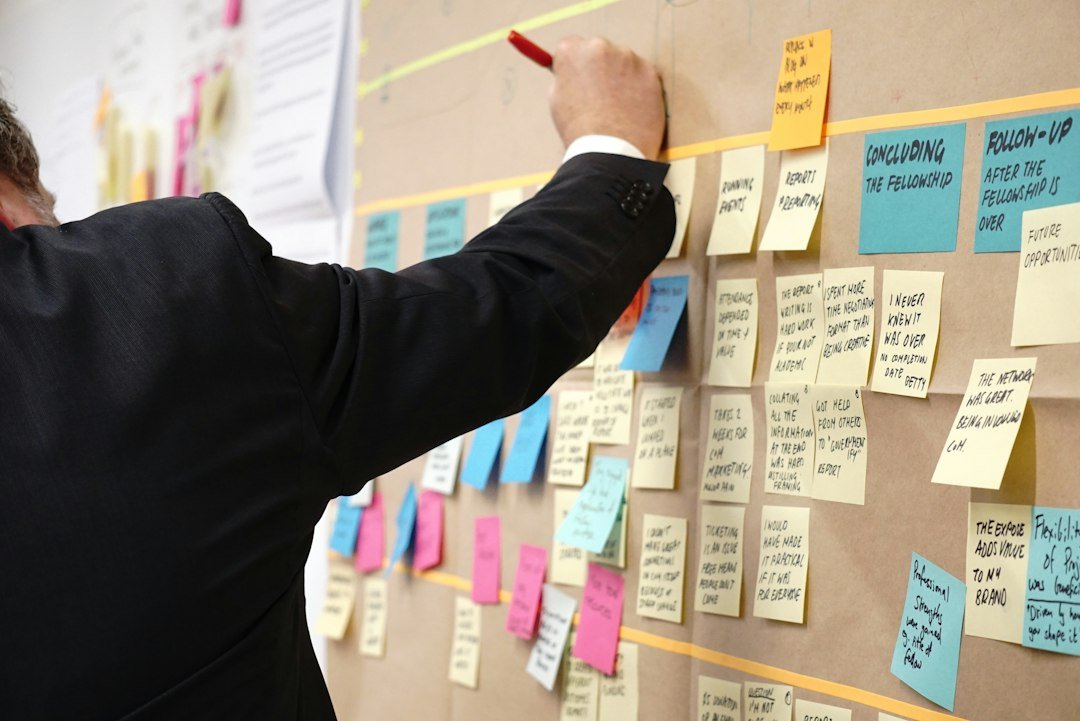
User acceptance testing should not be a guided tour where the implementation team shows users that standard transactions can be completed. UAT should prove that real business scenarios work with realistic data, user permissions, taxes, approval paths, documents and reports.
Test happy paths and exceptions: partial deliveries, returns, credit notes, cancelled orders, overdue invoices, wrong approvals, multi-company transactions, backdated entries and failed integrations. Reconcile outputs back to expected accounting and operational results.
Odoo’s upgrade documentation strongly recommends testing as many business flows as possible before production. The same discipline belongs in a new implementation. Vectra’s Odoo UAT checklist for UAE businesses provides a practical structure for finance, operations, integrations and controls.
ERP projects often depend on payment gateways, e-commerce platforms, logistics systems, banks, attendance devices, third-party applications, reporting tools or government-related data flows. If integrations are treated as a final technical task, the project may discover too late that field mappings, authentication methods, timing requirements or exception handling were never agreed.
How to avoid it: define each interface during solution design. Document the source system, target system, data owner, trigger, frequency, field mapping, authentication method, error handling, retry logic and reconciliation process. For complex environments, use a governed system integration architecture rather than point-to-point connections that become difficult to support.
Importing every historical transaction can increase effort without improving the new system. Many businesses need clean master data, opening balances, outstanding receivables/payables, open orders and a defined amount of historical information for reporting—not a full replica of years of legacy detail.
Decide the migration scope based on operational need, statutory record retention outside Odoo, audit requirements and management reporting. Keep the original system or an archive accessible where appropriate instead of turning migration into a data-reconstruction project.
The project does not end when users log in on day one. Someone must own master data, user access, issue prioritization, report changes, integrations, training and enhancement requests. Without ownership, small changes accumulate and the ERP gradually loses consistency.
A good handover should include the system owner, module owners, support route, issue-severity definitions, backup responsibilities, integration monitoring, release/change approval and a list of known post-go-live items.
For a broader end-to-end sequence, use the Odoo ERP implementation checklist for UAE businesses. Businesses still deciding on licensing and deployment can also review Odoo Community vs Enterprise in the UAE.
The most damaging mistake is usually starting configuration before the business has agreed its target processes and decision owners. That creates repeated rework across configuration, data migration, training and testing.
No. Customization is appropriate when there is a clear business, control or compliance requirement that standard Odoo cannot meet. The risk comes from customizing by default instead of first testing whether standard functionality or a simpler process can satisfy the requirement.
There is no single transaction count that guarantees readiness. Testing should cover every critical end-to-end process, major exception, user role, integration and financial reconciliation needed for day-to-day operations.
Vectra Technologies supports Odoo projects from requirements analysis and process design through configuration, migration, integrations, UAT and go-live support. Contact Vectra Technologies to review your implementation scope and identify the areas that need the strongest controls before the project begins.
Featured photo by Austin Distel on Unsplash. Process-mapping photo by Jo Szczepanska on Unsplash.