Call Anytime 24/7
Mail Us For Support
info@vectratechnologiesuae.comOffice Address
Sheikha Mahra Ahmed Al-Ghuraer – Al-Qusais 2 – Office No. M113-0213 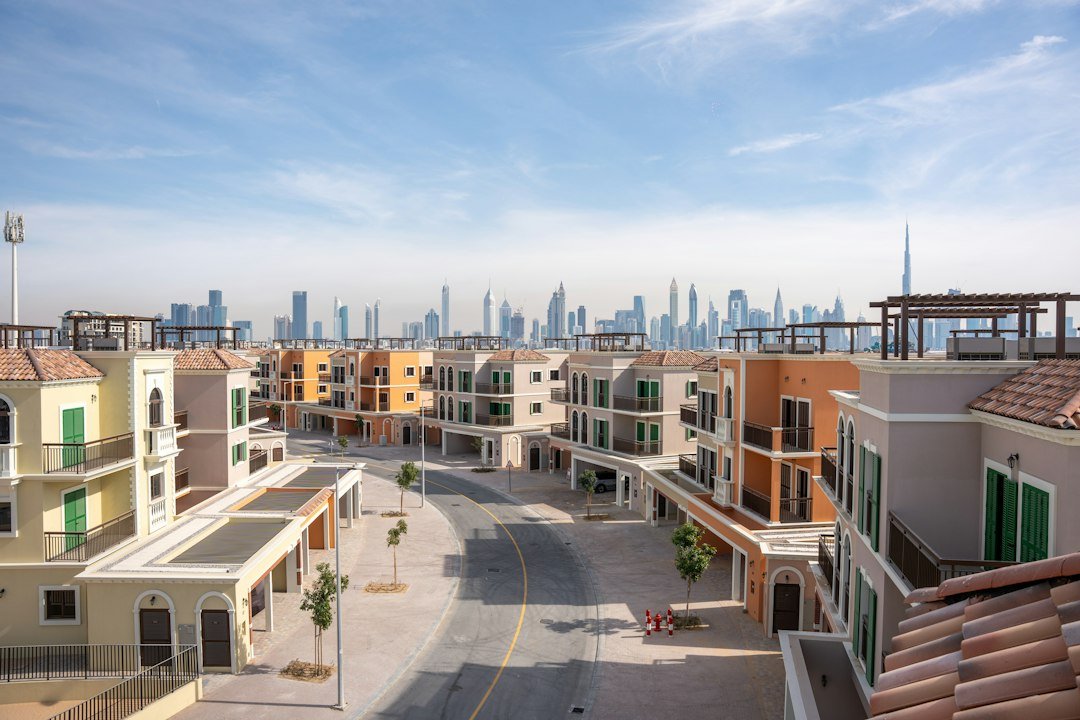
Real estate and property management companies have a different ERP challenge from ordinary trading businesses. They are not only issuing invoices and paying suppliers; they must keep owners, buildings, units, tenants, leases, deposits, recurring rent, maintenance costs, commissions and post-dated cheques aligned in one operational model. Odoo can be a strong platform for this, but the implementation works best when the property structure and accounting logic are designed before workflows are customized.
This guide explains a practical Odoo architecture for UAE property managers, landlords and real-estate operators, including where standard Odoo capabilities can be used and where property-specific configuration or development is usually needed.
A generic accounting system starts with customers, suppliers, invoices and payments. Property management adds several layers between the customer and the accounting entry. A tenant belongs to a lease; the lease belongs to a unit; the unit belongs to a building; and the building may belong to an owner whose income and expenses must be reported separately.
A clean hierarchy usually looks like:
If these relationships are not designed early, finance teams often fall back to spreadsheets to answer questions such as which unit generated an expense, which owner bears it, or which tenant payment settled which rent period.
Odoo 19 provides useful building blocks across Accounting, CRM, Sales, Subscriptions, Rental, Documents, Sign and analytic accounting. Its Rental application supports rental orders, scheduling and invoicing, while Odoo Subscriptions supports recurring billing plans. Odoo analytic accounting can track revenue and costs by analytic account or plan.
A property-management company normally needs a richer property model than these standard workflows alone provide. Owner/building/unit records, occupancy status, lease-specific schedules, security deposits, PDC registers, owner statements and property-specific approval rules are commonly implemented through configuration and custom modules. The objective is to extend Odoo around a clean data model rather than force a property process into unrelated standard objects.
| Business object | What the ERP should track | Why it matters |
|---|---|---|
| Owner | Legal name, contract, bank details, management fee rules | Separates owner obligations and reporting |
| Building | Owner, location, budget, expected expenses | Supports building-level control |
| Unit | Building, unit number, type, status, rent, deposit | Creates the rentable inventory |
| Lease | Tenant, unit, dates, rent schedule, deposit, payment method | Drives billing and collections |
| Payment / PDC | Amount, due date, invoice, cheque reference, status | Connects collections to rent periods |
| Expense | Supplier, property, owner responsibility, category | Supports profitability analysis |
For multi-owner businesses, it is also important to decide whether owners are represented through separate companies, analytic dimensions, dedicated ledgers, or a combination. The right structure depends on legal ownership and reporting requirements.

Recurring rent should be generated from approved lease terms rather than keyed manually every month. The lease should define billing frequency, installment amounts, rent period, deposit, payment method, commission or management charges and any advance-payment structure.
Odoo Subscriptions can support recurring periods such as weeks, months and years, but a real-estate implementation may still need custom rules for irregular installment schedules, cheque-based collections or owner-specific terms. The safest design is to keep one authoritative lease schedule and generate invoices from it so finance can reconcile every invoice back to the contract.
A useful PDC register should capture cheque number, bank, amount, due date, tenant, lease, unit, owner and status. It should also record replacement cheques while preserving the original audit trail. This workflow should be designed separately from the normal payment process so operational cheque status is not confused with an accounting settlement event.
Property managers need more than a company-wide profit and loss statement. Management may need revenue, direct expenses, maintenance spend, management fees and net return by owner, building and sometimes unit.
Odoo analytic accounting can support this segmentation. Analytic plans can be mandatory for selected transactions, and analytic distribution can allocate costs across one or more analytic accounts. A practical design might use separate dimensions for owner and property, with validation rules that prevent a supplier bill from being posted without the required property coding.
This creates a clean foundation for dashboards in Power BI, where occupancy, rent collection, arrears, expense variance and owner profitability can be analysed together.
Maintenance requests, purchase orders and supplier bills should identify the affected building or unit. The system should distinguish between expenses paid by the property manager, expenses recoverable from a tenant, and expenses chargeable to an owner. Approval limits can then be applied before costs are committed.
UAE real-estate VAT treatment can depend on the nature of the property and transaction, so tax logic should not be hard-coded from assumptions. The ERP should apply approved tax mappings, preserve supporting documents and generate invoices based on the company’s actual tax position. The UAE Federal Tax Authority maintains current VAT guides and public clarifications and tax-invoice guidance.
Clean customer records, tax identifiers and structured invoice fields also make UAE e-invoicing readiness easier to manage than trying to repair inconsistent source data later.
Odoo provides many of the required building blocks, including accounting, recurring billing, rental, documents, e-signature and analytics. A full owner-building-unit-lease model and UAE-specific workflows such as PDC tracking usually require configuration or a purpose-built extension.
Yes, when the accounting and analytic structure is designed for that requirement from the beginning. Owner statements, property profitability and expense allocation should be part of the data model and UAT scope.
Yes. Operational reporting can remain in Odoo, while advanced dashboards can combine ERP data in Power BI. Consistent master data and reconciled financial logic are the key prerequisites.
Vectra Technologies can help design the owner-building-unit-lease model, accounting flow, collections, PDC and reporting workflows. Review our Odoo ERP implementation services in the UAE, system integration services and property-management ERP case study, or contact Vectra Technologies.
Featured photo by Ben Koorengevel on Unsplash.